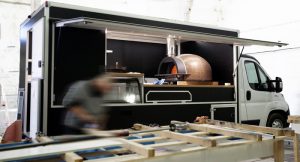
Adopting a vintage style for your mobile restoration project is a powerful marketing lever to instantly capture attention. At Ecomag, we don’t restore vintage vehicles, because our priority is the operational reliability of your work tool. Our team focuses on customizing high-performancetrucks to meet today’s sanitary and technical requirements.
For entrepreneurs wishing to combine the cachet of the old with the serenity of the new, our sales managers offer the Citroën Type H for sale. This iconic model creates a strong emotional connection with your customers, while guaranteeing a modern technical infrastructure. Choosing a retro-design food truck from Ecomag means choosing the efficiency of a ready-to-use vehicle without the mechanical hazards of conventional catering.
What you need to know before taking the plunge
Capital investment: Plan on a budget of €15,000 to €50,000. This amount varies significantly depending on the condition of the chassis and your equipment requirements. A used food truck can be an alternative, but a vintage model requires a substantial budget for equipment.
Time to launch: Allow at least 6 months. This is a critical factor for your cash flow: during this period, the vehicle will not generate any revenue.
Regulatory Compliance: VASP (Specialized Motor Vehicle) certification is a strict legal requirement. Without it, your mobile business is in violation of the law. Our teams ensure that every truck conversion strictly adheres to these standards.
Technical Expertise: A successful project requires synergy between mechanical, electrical, and bodywork systems. This is whereEcomag comes in: we handle the technical aspects and interior installation to deliver a ready-to-use work vehicle.
Marketing impact: This is the major benefit. A Citroën Type H isn’t just a truck, it’s a customer magnet that reduces your advertising acquisition costs thanks to its immediate appeal.
Why choose a vintage vehicle for your food truck project?
Authenticity is the driving force behind your visibility. In a saturated market, a vehicle with a retro design breaks away from industrial uniformity and tells a story that resonates immediately. Our account managers see the impact of a Citroën Type H every day: its iconic silhouette evokes craftsmanship and expertise, building instant trust with consumers.
Multiplied Marketing ROI
The emotional appeal of vintage is a growth accelerator. Your customers aren’t just buying a product; they’re embracing an experience they share on social media. This user-generated content is powerful organic advertising that reduces your marketing costs.
Ecomag’s Pragmatic Approach: Securing Your Business Operations
However, passion must not overshadow economic viability. A vintage vehicle can present significant mechanical challenges. That’s why, at Ecomag, we’ve chosen not to restore vintage vehicles so we can focus on what matters most:custom-fitting trucks to meet the strictest safety and hygiene standards.
From a practical standpoint, models like the Type H or the Peugeot J7 offer optimized interior space. Our team transforms this space into ergonomic professional kitchens, combining the charm of vintage design with the durability of modern equipment built for heavy-duty use.
Note from our experts: To ensure a successful entry into the market, don’t overlook the financial aspect. Consult our guide on food truck pricing to confirm your investment budget.
The star models of vintage mobile catering
Your choice of carrier determines your company’s operational capacity. At Ecomag, we analyze the technical characteristics of each model to ensure consistency between your concept and the reality on the ground.
The Citroën Type H: The gold standard. A must-have, its iconic silhouette offers optimal cargo space and headroom for food truck operations. It’s the model our sales representatives prioritize for sale because it combines strong visual appeal with great versatility. It’s a sound investment for a high-volume business.
The Volkswagen Combi: The “Light Food” Choice. More compact, the Combi is ideal for coffee truck or ice cream vendor concepts. While it’s immensely popular, its limited space requires meticulous interior design.
Peugeot J7 and Renault Estafette: The Pragmatic Alternative. These models offer an excellent balance of cost and authenticity. The J7, in particular, is appreciated by our technical team for its generous interior space, which allows for an ergonomic and functional food truck layout.
Citroën C25 and Peugeot J5: The budget-friendly compromise. For tight budgets, these vehicles from the 1980s are practical solutions. They offer superior mechanical reliability and are easy to maintain on a daily basis, while retaining a retro look that customers appreciate.
Ecomag’s advice: No matter which model you choose, keep in mind that the conversion must comply with VASP certification standards. We do not restore vintage vehicle bodies, but we guarantee a professional, durable, and compliant interior fit-out.
Before finalizing your decision, consult our experts about the cost of a food truck to adjust your financing plan.
The key stages of restoration for professional use
Transforming a vintage vehicle into a mobile retail unit is an industrial process that leaves no room for improvisation. For Ecomag, each step must ensure optimal cost-effectiveness.
1. Diagnosis and Assessment Before making any investment, a comprehensive technical audit (chassis, engine, electrical system) is essential. This assessment determines your break-even point. Without a sound foundation, your project risks being shut down prematurely.
2. Body integrity The body is not just a question of style; it’s the envelope of your future kitchen laboratory. It must guarantee perfect watertightness and long-lasting anti-corrosion treatment. Upgrading to professional standards requires a budget of between €5,000 and €15,000. Please note thatEcomag does not intervene in the restoration of old bodywork; we concentrate on the integration of openings and compliant access.
3. Powertrain Reliability: A malfunctioning engine means immediate lost revenue. The engine must undergo a complete overhaul to support the weight of the interior fit-out. Set aside a contingency budget of between €3,000 and €10,000.
4. Interior Design Engineering: Our Core Competence This is where your project becomes profitable.Designing a food truck requires a balance between ergonomic workflow and strict compliance with health and electrical safety standards.
- Professional kitchen design budget: €8,000 to €20,000;
- Ecomag Expertise: We design optimized workstations and high-capacity electrical circuits capable of continuously powering your cooking equipment.
Expert Tip: Your top priority is to obtain VASP certification so you can operate and work legally. To assess the overall feasibility of your concept, check out our analysis of food truck costs or explore our food truck ideas to validate your setup.
Regulations and homologation: the essential steps to take
Launching a mobile business in a vintage vehicle requires meticulous attention to administrative details. At Ecomag, we incorporate these requirements right from the design phase to ensure the viability of your business.
1. VASP Certification: A Legal Requirement Obtaining VASP certification is a non-negotiable step in converting a commercial vehicle into a food service unit. This certification, issued following a technical safety inspection, validates the conversion of your vehicle. Every food truck conversion designed by our teams is engineered to meet DREAL requirements. We safeguard your investment by eliminating the risk of certification rejection.
2. Technical file and engineering The process of compiling the file is a complex one: layout plans, load distribution calculations and equipment conformity certificates. Anticipation is key: a poorly prepared file can paralyze your business for several months. Our project managers manage this technical interface so that you can concentrate on your commercial offer.
3. Protection and Insurance A vintage vehicle presents a specific risk profile for insurers. The premium is calculated based on the vehicle’s market value and the complexity of its professional modifications. For “comprehensive” coverage that includes your business equipment, budget between €1,500 and €3,000 annually . Appropriate insurance is your only safeguard against business losses .
4. Compliance with Sanitary Standards (HACCP) The interior must meet impeccable hygiene standards.
- Surfaces: Smooth, rot-resistant, and washable materials;
- Flow: Compliance with the principle of one-way traffic;
- Equipment: Forced ventilation and compliant water outlets. These factors directly affect the price of your food truck but ensure you avoid penalties during health inspections.
Expert advice: Never underestimate the weight of regulations. A beautiful truck that can’t run or is shut down by the health authorities is a toxic asset. To get off to a sound start, explore our tried-and-tested food truck ideas or contact us for atailor-made audit of your project.
Budget and profitability: making the right calculations
At Ecomag, we know that a passion for vintage must go hand in hand with strict profitability.
A retro mobile retail business is a strategic investment that requires complete financial transparency.
Initial Investment Overview (average estimates)
| Expense item | Entry-level | Standard configuration | High-end |
| Acquisition of the carrier | 5 000 € | 12 000 € | 25 000 € |
| Bodywork* repair | 5 000 € | 10 000 € | 20 000 € |
| Mechanical reliability* (in French) | 3 000 € | 7 000 € | 15 000 € |
| Ecomag layout | 8 000 € | 15 000 € | 30 000 € |
| Certification & VASP | 2 000 € | 3 000 € | 5 000 € |
*Note: Ecomag focuses exclusively on interior design and can offer Citroën Type H models for sale. Body and mechanical restoration must be entrusted to specialized workshops.
Although the overall cost (€30,000 to €80,000) is higher than that of a standard utility vehicle, the return on investment is driven by two factors:
- Marketing amortization: Your vehicle is a moving billboard. It drastically reduces your advertising costs;
- Asset longevity: A sturdy chassis and simple mechanics, if properly maintained, retain a very high resale value in the used food truck market.
Profitability Outlook
A well-positioned vintage concept can target annual revenue of €150,000 to €300,000. With rigorous cash flow management and a layout optimized by our experts to maximize efficiency, the break-even point is generally reached within 3 to 5 years.
Ecomag Expert Opinion: Unforeseen expenses are the only certainty in the vintage business. Our account managers recommend that you always set aside a contingency fund of 10 to 15% of your total budget to cover any unexpected costs during the launch phase.
To refine your business plan, check out our detailed guide on the cost of a food truck or contact us for a customized analysis of your food truck.
Finding the right professionals for your project
The viability of your vintage food truck depends on the technical expertise of the people who build it. In this field, cutting corners is a hidden cost you can’t afford. At Ecomag, we advise our clients to carefully select each contractor to transform an old chassis into a productive asset.
1. Mechanics and Bodywork: A Job for Specialists Don’t entrust a Citroën Type H or an Estafette to a general repair shop. Restoring vintage sheet metal and ensuring the reliability of vintage engines require skills that are no longer widely available.
Our advice: Ask for references on vehicles used for intensive commercial purposes. A classic car driven only on Sundays doesn’t face the same demands as a food truck operating 6 days a week.
2. Custom Fit-Out: Ecomag’s Expertise This is where our expertise comes into play. While we don’t restore engines, we specialize incustom truck fit-outs. Transforming a vintage vehicle into a high-performance kitchen requires mastery of:
- Sanitary standards (HACCP);
- Electrical engineering for cooking equipment;
- Workplace ergonomics to maximize your throughput.
3. A Results-Oriented Approach: Be wary of unusually low quotes. When setting up a mobile retail truck, an initial cost savings often results in costly downtime after just a few months of operation. At Ecomag, our project managers prioritize the durability of materials and regulatory compliance (VASP).
A successful project is one where every aspect is in its proper place. To create a work vehicle that’s as attractive as it is efficient, start by validating the feasibility of your concept. Check out our food truck ideas or explore the cost of a turnkey food truck to launch your business on a solid foundation.
FAQ: your questions about restoring vintage vehicles
-
How long does it take to fully restore a vintage vehicle?
Excellent question! The timeframe varies greatly depending on the vehicle’s initial condition and the scope of the work. For a complete restoration—including bodywork, mechanical work, and interior work—expect it to take between 8 months and 2 years. The most ambitious projects can take even longer. My advice: always allow for 30% more time than your initial estimates, because classic cars often have surprises in store!
-
Can you restore a vintage car yourself to save money?
It’s tempting, I’ll grant you that! If you have skills in mechanics and auto body repair, you can indeed do some of the work yourself. However, be careful with complex technical aspects like electrical work or VASP certification. When it comes to food service setups, health and safety regulations often require the involvement of certified professionals. A hybrid approach works well: do what you’re comfortable with yourself and delegate the rest.
-
Where can I find replacement parts for vintage vehicles?
There are several options available to you. Enthusiast clubs are a goldmine of information and contacts. The Internet is full of specialized sites, but be careful about the quality of the parts. Auto salvage yards may still hold hidden treasures, even if this is becoming increasingly rare. Finally, some craftsmen specialize in reproducing parts that are impossible to find. Be prepared to set aside a substantial budget: rare parts can be very expensive.
-
Is a restored vintage vehicle reliable for heavy-duty professional use?
Good question! With a well-executed restoration and regular maintenance, a vintage vehicle can be quite reliable. These cars were built to last, unlike today’s vehicles, which are often designed with planned obsolescence in mind. However, they require more attention than a modern utility vehicle. Plan for higher maintenance costs and always keep a few spare parts on hand. Experience shows that a well-maintained vintage vehicle can run for decades without any major problems.
-
What is the added value of a vintage food truck compared to a modern vehicle?
The difference is striking! A vintage vehicle naturally attracts attention and creates an emotional connection with customers. It’s a powerful marketing tool that generates word-of-mouth and social media shares. Your customers don’t just come to eat—they come for the experience. This marketing aspect can justify slightly higher prices and help build customer loyalty. Not to mention that you’re helping to preserve automotive heritage!