Do you dream of starting your own mobile catering business? Excellent idea! The
Key points to remember
- Mobile catering vehicles fall into several categories: converted trucks, trailers, vintage food trucks and light vehicles;
- Regulations impose strict health, safety and VASP (Specialized Self-Propelled Vehicle) certification standards.
- The layout must respect the forward motion and integrate all mandatory professional equipment;
- The budget ranges from €25,000 for a basic trailer to over €120,000 for a top-of-the-range truck;
- Administrative procedures include obtaining the appropriate permit, VASP registration and parking permits;
The different types of vehicles for mobile catering
When we think of mobile catering vehicles, we immediately think of the classic food truck. But the world of mobile kitchens offers many more possibilities! Each type of vehicle has its own advantages and constraints, depending on your budget, your culinary concept and your ambitions.
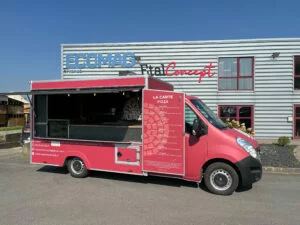
The converted truck is the most versatile solution. Generally based on a 3.5-ton chassis(Iveco Daily, Renault Master, Mercedes Sprinter), they offer a comfortable workspace and excellent visibility for your brand. These vehicles allow you to install a complete kitchen with all the necessary professional equipment. The investment remains substantial, but profitability generally follows.
Trailers are an interesting alternative for starting out. More affordable to buy, they require a towing vehicle but offer great flexibility. You can easily change location and even leave the trailer on site while your personal vehicle remains available. Perfect for testing your concept before investing further.
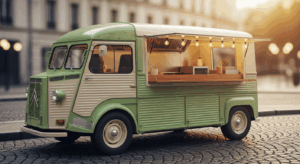
Vintage food trucks seduce with their authentic charm. Based on old vehicles(Citroën H, Volkswagen Combi, Peugeot J7), they catch the eye and create a unique atmosphere. But beware: restoring these vehicles takes time and technical expertise. The nostalgic aspect is very appealing, but working space is often limited.
Finally, light vehicles (under 3.5 tonnes) are ideal for simple concepts such as beverage sales, light snacking and ice cream. Easier to drive with a standard “B” license, they allow access to locations that are off-limits to large trucks. The layout remains limited, but agility more than makes up for it.
Understanding the regulations governing mobile catering vehicles
At first glance, the regulations governing mobile catering vehicles may seem complex. However, once you’ve mastered the main principles, everything becomes clearer. The main aim of these regulations is to protect consumers and guarantee impeccable hygiene conditions.
VASP (Véhicule Automoteur Spécialisé) approval is a prerequisite for any restoration vehicle. This procedure,
Food hygiene standards apply rigorously to catering vehicles. Your layout must respect the “forward march”: food follows a logical path from reception to sale, without ever going backwards. Surfaces must be easy to clean, refrigeration equipment correctly dimensioned, and wastewater disposal in compliance with sanitary requirements.
The driving license required depends on your vehicle’s Gross Vehicle Weight Rating (GVWR). A B license is sufficient for vehicles up to 3.5 tonnes, but above this weight, a C license becomes compulsory. For trailers over 750 kg, a BE license is required. These training courses represent an additional investment in your budget.
Parking permits vary from town to town. Some towns have set up dedicated parking areas for food trucks, while others ban street vending altogether.
Always check with the town hall in your catchment area. Private markets and events often offer interesting alternatives to public sites.
The optimum layout for your restoration vehicle
The layout of your mobile catering vehicle largely determines your operational efficiency. A well-designed space saves time, improves working conditions and optimizes profitability. Every square centimeter counts in this constrained environment!
The professional on-board kitchen must integrate all essential workstations. The
Ergonomics deserve special attention. In a small space, every gesture must be optimized. Place the most frequently used equipment within easy reach, organize storage by frequency of use, and provide work surfaces at the right height. A poorly designed layout quickly turns service into an obstacle course.
There’s no room for compromise when it comes to safety equipment. Automatic sprinkler systems above cooking zones, smoke detectors, easily accessible fire extinguishers, emergency cut-offs for gas and electricity: all these elements are mandatory and can save lives. Mechanical ventilation efficiently evacuates cooking fumes and vapors.
Energy supply is the key to your autonomy. Generators ensure energy independence, but beware of noise levels and emissions. Lithium batteries coupled with solar panels offer a more ecological alternative for moderate needs. The supply of clean water and the evacuation of wastewater require tanks sized according to your activity.
Choosing the right equipment for your culinary concept
The choice of equipment determines not only the quality of your preparations, but also your efficiency and profitability. Each culinary concept has its own specific technical features that you need to master before starting out.
For a burger and French fries concept, the professional plancha becomes the central piece of equipment.
Choose gas models with generous cooking surfaces and efficient grease recovery systems. Double-bowl fryers can handle different products simultaneously. Don’t forget the panini grill for variety and the warmer to keep sauces at temperature.
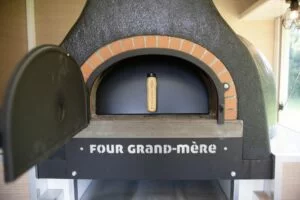
World cuisine concepts require specialized equipment. A professional wok over an open flame for Asian cuisine, a compact pizza oven for Italian concepts, or a teppanyaki plancha for Japanese cuisine. This specific equipment creates the authenticity your customers are looking for, but requires particular technical mastery.
The mobile crêperie is all about the billig (Breton griddle). This traditional enamelled cast-iron appliance ensures perfect cooking of galettes and crêpes. Complete with a hot plate for hot fillings and aheat-retaining system for sweet crepes. The investment is moderate, but the cooking technique requires practice.
Ice-cream concepts favor refrigerated display cases and Italian ice machines. This power-hungry equipment requires a stable, powerful power supply. Professional ice-cream makers make it possible to offer in-house flavors, a real commercial added value. Beware of cold chain constraints when on the move!
Budgeting and financing your mobile catering project
Launching a mobile catering vehicle represents a substantial investment that needs to be carefully anticipated. Budget differences can be enormous, depending on the choices you make, which is why it’s so important to define your project in advance.
The first item of expenditure is the purchase of the basic vehicle. Expect to pay between €15,000 and €40,000 for a used truck in good condition, and up to €80,000 for a new one. Used trailers start at around €8,000, but new, fully-equipped models easily reach €50,000. Vintage vehicles often require complete restoration, which can double the initial budget.
Professional fittings generally account for 50-70% of the total budget. A basic layout costs around €20,000, while a top-of-the-range kitchen can exceed €80,000. Cooking, refrigeration and ventilation equipment are the most expensive items. Don’t forget VASP certification (€2,000 to €5,000) and compliance costs.
Ancillary costs add up quickly:
- specialized driving license (€1,500 to €3,000),
- professional insurance (€2,000 to €4,000/year),
- food hygiene training (€350),
- business start-up and accounting costs.
You should also provide working capital for the first few months of business, while you build up customer loyalty.
There are several financing solutions available to entrepreneurs. The traditional bank loan remains the main option, but banks often require a minimum 30% down payment. Specialized commercial vehicle financing organizations sometimes offer more flexible terms. Leasing allows you to limit the initial capital outlay, but is more expensive over the term.
Public assistance can significantly reduce your investment. ACRE (Aide à la Création ou à la Reprise d’Entreprise) provides partial exemption from social charges for the first year. Some regions offer specific subsidies for food trucks, particularly in the context of tourism development. Interest-free loans can be a useful complement to your financing plan.
Frequently asked questions about mobile catering vehicles
-
Quel permis faut-il pour conduire un food truck ?
Excellente question ! Tout dépend du poids de votre véhicule. Pour un food truck de moins de 3,5 tonnes (PTAC), votre permis B classique suffit parfaitement. C'est le cas de la plupart des véhicules basés sur Renault Master, Iveco Daily ou Mercedes Sprinter. Au-delà de 3,5 tonnes, le permis C devient obligatoire.
Pour les remorques de plus de 750 kg, ajoutez le permis BE à votre permis B. Ces formations coûtent entre 1 500 et 3 000 €, mais ouvrent l'accès à des véhicules plus spacieux.
-
Combien coûte vraiment un véhicule de restauration ambulante ?
Le budget varie énormément selon vos ambitions ! Une remorque d'occasion basique démarre autour de 15 000 €, parfaite pour tester votre concept. Un food truck neuf clé en main oscille entre 80 000 et 150 000 €. Les véhicules vintage nécessitent souvent 40 000 à 60 000 € de restauration complète. N'oubliez pas les frais cachés : homologation VASP (3 000 €), assurance (3 000 €/an), et fonds de roulement pour démarrer. Comptez au minimum 50 000 € pour un projet sérieux.
-
Peut-on stationner partout avec un food truck ?
Malheureusement non ! Chaque commune définit ses propres règles de stationnement pour la vente ambulante. Certaines villes interdisent purement et simplement les food trucks sur la voie publique, d'autres ont créé des emplacements dédiés. Renseignez-vous systématiquement en mairie avant de vous installer. Les marchés hebdomadaires, festivals et événements privés offrent souvent de meilleures opportunités que le stationnement sauvage, qui peut vous coûter cher en amendes.
-
Quelle formation faut-il pour ouvrir un food truck ?
La formation en hygiène alimentaire (HACCP) est obligatoire pour manipuler des denrées alimentaires. Cette formation de 14 heures coûte environ 350 € et se déroule sur deux jours. Si vous avez déjà une expérience professionnelle en restauration de plus de 3 ans, vous en êtes dispensé. Aucun diplôme culinaire n'est exigé, mais une solide expérience en cuisine s'avère indispensable pour réussir. La gestion d'entreprise mérite aussi une formation, car beaucoup d'échecs viennent de lacunes administratives et financières.
Découvrez les aides financères pour la formation hygiène
-
Comment obtenir l'homologation VASP obligatoire ?
L'homologation VASP (Véhicule Automoteur Spécialisé) s'obtient auprès d'un organisme agréé comme UTAC ou Dekra. Votre aménageur peut généralement s'en charger, c'est même recommandé car il connaît les normes à respecter. La procédure coûte entre 2 000 et 5 000 € selon la complexité de votre aménagement. Comptez 4 à 8 semaines de délai. Sans cette homologation, votre véhicule ne peut pas circuler légalement avec son aménagement de restauration. C'est un passage obligé, alors anticipez-le dans votre planning !