Do you want to work for yourself, get out and about, and show your pizzas to repeat customers? The mobile pizzeria ticks a lot of boxes: an agile format, a more reasonable start-up cost than a restaurant, and real potential if the concept is well managed.
In this guide, we take you step by step, without blah, blah, blah: from the idea to the launch, including the choice of truck and oven, the obligations to anticipate and the decisions that determine day-to-day profitability. The aim is to help you build a solid, realistic project… one that’s viable over the long term.
Gist of the article
- Initial budget: between €30,000 and €100,000, depending on whether you opt for a new or used truck;
- Profitability: a well-positioned mobile pizzeria generates between €3,000 and €8,000 in monthly sales;
- Time: 3 to 6 months from idea to opening, including administrative procedures;
- Compulsory training: adapted driving license, food hygiene training (HACCP), itinerant merchant card;
- Key success factor: the location of your truck represents 70% of your commercial success;
Step 1: Analyze your local market and identify opportunities
Before you invest in your own pizza truck, you need to carry out a rigorous market study. This analysis will determine the viability of your project and guide your strategic choices.
Define your catchment area
Identify a 15 to 20 kilometer perimeter around your home. This zone is your main playground.
Analyze population density, average income and consumer habits. Suburban areas and small towns of 2,000 to 15,000 inhabitants often offer the best opportunities for a mobile pizzeria.
Study the competition
List all the fast-food outlets in your area: fixed pizzerias, other food trucks, bakeries offering pizzas. Note their opening hours, prices and positioning. This analysis will reveal any vacant slots and the winning strategies to adopt.
Identify your strategic locations
Identify busy areas: business parks, markets, local events, school exits, shopping malls. Each location has its own specificities: business parks operate at lunchtime on weekdays, events at weekends. Diversify your points of sale to secure your sales.
Step 2: Defining your concept and positioning
Your concept determines your differentiation in the marketplace. It directly influences your choice of equipment, your budget and your sales strategy.
Choose your pizza speciality
There are three main directions you can take:
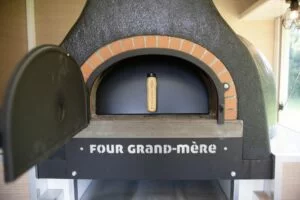
- Neapolitan pizza: wood-fired gourd, artisanal dough, premium ingredients. Upscale positioning, prices €12-18;
- Classic pizza: gas or electric oven, traditional recipes. Family positioning, price €8-14;
- Creative pizza: original recipes, local ingredients. Differentiating positioning, prices €10-16;
Define your product range
Limit yourself to a maximum of 8-12 references to optimize your supplies and preparation time. Include 2-3 vegetarian pizzas and a gluten-free option to broaden your customer base. Complement with drinks, simple desserts and possibly salads.
Calculate your rates
Apply a multiplier of 3 to 4 to the material cost. A pizza costing €3 in ingredients will sell for €12. This margin covers your fixed costs, your wages and generates a profit.
Step 3: Draw up your business plan and calculate your budget
The business plan structures your project and secures your financing. It quantifies the profitability of your mobile pizzeria and identifies potential risks.
Estimate your initial investment
Expense item | Used trucks | New truck |
Vehicle and fittings | 25 000 – 45 000 € | 60 000 – 90 000 € |
Equipment (oven, fridge, etc.) | 8 000 – 15 000 € | Included |
Initial stock and small equipment | 2 000 – 3 000 € | 2 000 – 3 000 € |
Formalities and insurance | 1 500 – 2 500 € | 1 500 – 2 500 € |
Total | 36 500 – 65 500 € | 63 500 – 95 500 € |
Project your monthly expenses
Your fixed costs include :
- insurance (€200-400),
- fuel (€300-600),
- vehicle maintenance (€150-300),
- telephone and accounting (€100-200),
- loan repayment (€400-800).
- Allow €1,200 to €2,300 for incompressible monthly expenses.
Calculate your break-even point
With an average margin of 65% and fixed costs of €1,800, you need to generate €2,770 in monthly sales to break even. This represents around 15 pizzas per working day, a realistic target with a good positioning.
Step 4: Choosing and purchasing your pizza truck
Your choice of vehicle determines your working comfort, brand image and profitability. There are several options to choose from, depending on your budget and ambitions.
New pizza trucks: a secure investment
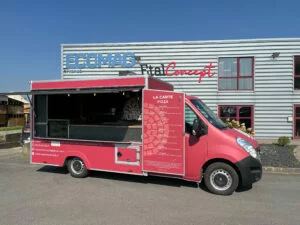
A new truck offers a full warranty, optimized layout and an immediate professional image. Specialized manufacturers offer turnkey solutions, including training. Allow 8 to 12 weeks for manufacturing and financing over 5 to 7 years.
Used trucks: the economical alternative
Buying a second-hand forwarder followed by professional fitting out halves the investment. Scrupulously check the vehicle’s mechanical condition, mileage and maintenance history. Choose vehicles with less than 150,000 km and less than 10 years old.
Essential technical criteria
Your truck must respect the 3.5-tonne GVW (Gross Vehicle Weight Rating) to be driven with a B license. Interior fittings must include: professional oven, stainless steel worktop, refrigeration, hand-washing station, LED lighting, efficient ventilation. CTTE (Centre Technique de Carrosserie et de Remorquage) approval is mandatory.
Step 5: Complete the administrative and regulatory formalities
Setting up your own mobile pizzeria requires a number of permits specific to mobile commerce and catering. Anticipate these procedures, which can take 2 to 3 months.
Choosing your legal status
There are three main options:
- Micro-entreprise: simple administration, social charges proportional to sales (22%). Annual sales capped at €176,200;
- EURL/SARL: protection of personal assets, tax optimization possible. More formalities but greater flexibility;
- SAS: status of manager as salaried employee, facilitates the development of several associates;
Read more: What legal status for your mobile pizzeria?
Obtain mandatory authorizations
An itinerant merchant’s card is essential. Issued by the CCI or Chambre des Métiers depending on your activity, it costs €30 and is renewed every 4 years. At the same time, take the HACCP food hygiene training course (14 hours, €300-500), which is compulsory if you want to handle foodstuffs.
Read: Municipal authorizations for your itinerant business
Take out the necessary insurance
Your insurance must cover: professional liability, commercial vehicle, professional equipment, business interruption. You should expect to pay between €2,000 and €4,000 a year, depending on the value of your equipment and your experience.
Step 6: Launch your business and develop your customer base
Your launch is the key to your long-term success. A well-orchestrated marketing strategy and impeccable service quickly build customer loyalty.
Preparing your opening
- Organize an opening week with promotional rates to raise your profile.
- Distribute flyers in your catchment area, set up social network accounts and list yourself on Google My Business.
- Word-of-mouth is your best ally in this local business.
Optimize your locations
- Test different niches and locations to identify your most profitable spots.
- Negotiate agreements with local companies for regular deliveries.
- Take part in local events: markets, village festivals, sporting events.
- Diversify your sources of income to secure your business.
Building customer loyalty
- Set up a simple loyalty system: loyalty card with 10th free pizza, discounts for group orders, daily menu at attractive prices.
- Focus on consistent product quality and fast service. One satisfied customer leads to three more.
Ready to make your project a reality?
Setting up a mobile pizzeria takes method, but the opportunities are real for motivated entrepreneurs. The mobile catering market continues to grow, driven by changing consumer habits and the quest for proximity.
Your success will rest on three pillars: rigorous market research, differentiating positioning and impeccable day-to-day execution.
Don’t hesitate to surround yourself with experienced professionals to validate your strategic choices and optimize your investment. The entrepreneurial adventure awaits you. With passion, perseverance and the right tools, your mobile pizzeria can become a thriving business, offering you the professional independence you’re looking for.
What budget should you set aside to start a mobile pizzeria?
The initial investment varies between €30,000 and €100,000, depending on your choices. A converted used truck is the most economical option (€35,000-50,000), while a new turnkey truck requires €70,000-100,000. Add €10,000 in working capital for the first few months of operation.
What training do you need to open a pizza truck?
HACCP food hygiene training (14 hours) is compulsory to handle foodstuffs. If you have no previous catering experience, additional training in business management and culinary techniques is highly recommended. Some truck manufacturers offer complete training courses.
How do I choose the best locations for my pizza truck?
Choose areas with a high density of working people: business parks (midday), city centers (evening), markets (morning), local events (weekends). Avoid direct proximity to fixed pizzerias. Test different time slots and measure your sales to optimize your planning.
How profitable can a mobile pizzeria be?
A well-positioned mobile pizzeria generates €4,000 to €8,000 in monthly sales. With a gross margin of 65%, you generate a margin of €2,600 to €5,200. Deduct €1,800 in fixed monthly expenses, and your net profit will vary between €800 and €3,400, depending on your activity.
Should I opt for a wood-fired or a gas oven?
The wood-fired oven offers authentic flavor and a show appreciated by customers, but requires more maintenance and consumes fuel. The gas oven guarantees constant temperature, rapid cooking and fewer constraints. For beginners, the gas oven represents the best compromise between efficiency and cost-effectiveness.
What are the main mistakes to avoid?
Classic mistakes include: underestimating fixed costs, neglecting market research, choosing unsuitable locations, offering too broad a menu, neglecting hygiene training. Prepare your project meticulously, and don’t hesitate to enlist the help of industry professionals.