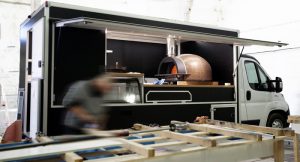
Whensetting up a food truck or itinerant restaurant, you must comply with hygiene and food safety requirements. These rules guarantee the quality of the food served. Understanding these regulatory requirements is important for any commercial entrepreneur wishing to launch a mobile restaurant or itinerant business in France with a truck or trailer. The transformation of the vehicle into a food truck requires compliance with obligations to ensure the success and legality of the business for the sale of pizza or other products.
What hygiene standards must a food truck meet?
Starting a food truck business is an exciting adventure, but it’s essential not to overlook one crucial aspect: health and safety standards. The success of your business depends largely on the confidence your customers have in the quality and cleanliness of your food truck. In this article, we’ll explore how to get trained in hygiene standards, as well as best practices for setting up your food truck while respecting these essential standards.
European and French regulations
Regulation (EC) no. 852/2004 on the hygiene of foodstuffs forms the regulatory basis for food trucks in France. This text imposes food safety requirements applicable to all catering establishments, including itinerant businesses. The main obligations concern :
- Implementation of a self-checking system based on HACCP principles;
- Food traceability;
- Compliance with good hygiene practices;
- Hygiene training for staff;
The decree of December 21, 2009 completes the regulations by defining the sanitary rules applicable to the retail trade and transport of foodstuffs of animal origin.
Truck or trailer fittings and equipment
- Suitable materials: smooth, washable, corrosion-resistant and non-toxic work surfaces;
- Hand wash basin: equipped with cold water, soap and single-use towels;
- Refrigerated storage area: to maintain the cold chain;
- Separation of areas: respect the “forward motion” principle by separating clean and dirty areas;
Personnel hygiene
- Mandatory training for at least one person ;
- Clean, appropriate work clothes;
- Frequent hand washing;
Hygiene practices
- Regular cleaning of surfaces, utensils and equipment;
- Respecting temperatures: maintaining hot and cold links;
- Traceability of food to know where it comes from ;
- Waste management: use of closed garbage cans;
Compliance with these standards is mandatory to ensure consumer safety and comply with current regulations.
To sum up:
- Food handling rules: In-depth training on the prevention of cross-contamination and the safe handling of ingredients.
- Temperature control: rigorous monitoring of storage temperatures for raw and cooked foods, preventing the proliferation of bacteria.
- Personal hygiene: Frequent hand washing and clean uniforms to ensure hygienic food handling.
- Cleaning surfaces and equipment: Maintaining cleanliness in preparation areas, with particular emphasis on cooking and cutting surfaces.
- Waste management: Careful planning to avoid environmental contamination due to poor waste management.
- Compliance with local and national standards: Compliance with current regulations, including obtaining the necessary health licenses and undergoing regular inspections.
By scrupulously observing these hygiene standards, a food truck establishes a solid foundation for food safety, customer satisfaction and the lasting success of its business.
How to learn about hygiene standards
The first step to success in the food truck industry is to ensure that you and your staff have a thorough knowledge of hygiene standards.
Several hygiene training courses are available, offering valuable information on food handling, food safety and cleaning protocols.
Make sure you choose recognized and certified training courses, as they guarantee a thorough understanding of the standards that govern your industry. The same applies to any food truck.
Approval requirements for food trucks
VASP (Véhicule Automoteur Spécialement Aménagé) certification is a mandatory step for a food truck in France. Here are the main requirements:
Certification obligation
Since May 2018, VASP approval with the word “Magasin” on the vehicle registration document has been mandatory for all food trucks. This procedure aims to ensure road safety, as these vehicles carry potentially dangerous gas and electrical equipment. The average time to obtain accreditation is 4 to 8 weeks, depending on the complexity of the installations.
Technical requirements for the truck or trailer
Electrical installations
- Compliance with standard NF C 15-100 ;
- Installation of a differential circuit breaker ;
- Use compliant cables and plugs ;
- Overload protection ;
Gas equipment
- Compliance with standard NF EN 1949 ;
- Use compliant regulators and hoses ;
- Adequate ventilation ;
- Installing a gas detector ;
Certification procedure
- Obtaining a certificate of conformity for the base vehicle
- Fixtures and fittings in compliance with standards
- Application to DREAL for approval
- Vehicle inspection by a certified expert
- Issue of VASP accreditation certificate
Consequences of default
Failure to obtain VASP certification may result in :
- A fine of up to €7,500
- Vehicle immobilization
- Administrative closure of the business
- Legal risks in the event of an accident
Administrative implications
VASP certification also impacts :
- Insurance: obligation to take out professional insurance ;
- Taxation: possible tax exemptions;
- Obtaining authorizations to occupy the public domain 3 ;
VASP certification must be renewed every 5 years, or when the vehicle is modified, to guarantee continued compliance with current standards.
Liquor license
With regard to license IV (4th category license), it is important to note that :
- Food trucks cannot obtain a licence IV;
- They are limited to a 3rd group takeaway license;
- This license allows the sale of alcoholic beverages up to 18° alcohol (wine, beer).
The main reason for this restriction is that 4th category licenses require a fixed physical address, which is not compatible with the mobile activity of a food truck.
Setting up a food truck in compliance with hygiene standards
To fit out a food truck in compliance with French regulations, you need to take into account construction and equipment criteria. These requirements aim to guarantee food safety and hygiene in this mobile catering space.
Health-compliant materials and structures
The choice of materials used in the construction of a food truck is important for compliance with hygiene standards. According to EC regulation no. 852/2004, surfaces in contact with food must be made of :
- Non-toxic ;
- Lisses ;
- Washable ;
- Corrosion-resistant ;
- Waterproof ;
Choose surfaces that are easy to clean and disinfect, and opt for corrosion-resistant materials. Here are a few specific recommendations:
- Stainless steel: use stainless steel equipment in food preparation areas. They are not only durable, but also easy to clean.
- Antibacterial coatings: consider using antibacterial coatings on frequently touched surfaces, such as door handles and countertops.
- Food-grade plastics and certain composites specially designed for this industry.
For the floor, choose a non-slip, easy-to-clean covering such as linoleum or epoxy resin.
Workspace layout
The interior layout of a food truck or trailer must clearly separate the different work areas to avoid cross-contamination. A distinction is generally made between :
- A food preparation area: carefully separate raw and cooked preparation areas to avoid contamination. Use different colored cutting boards for each type of food;
- One cooking zone;
- A storage area (refrigerated and dry): respect temperature rules to avoid bacterial growth. Refrigerators and freezers should be checked regularly;
- Washing area;
- A space for waste management;
The design must promote a logical workflow, from storage to preparation, cooking and serving, while minimizing the risk of contamination.
Why is this important? An efficient layout ensures smooth staff circulation, reducing the risk of cross-contamination.
Professional equipment required
A bonded food truck must be equipped with :
- A drinking water connection system with a tank capacity of at least 50 liters
- A non-hand-operated sink for hand washing
- A sink for washing utensils
- Refrigeration equipment maintaining a maximum temperature of +3°C
- A smoke and odour extraction system
- Non-manually-operated enclosed garbage cans
Designing a food truck to meet standards: materials, equipment and layout
Setting up a food truck in France is governed by strict standards guaranteeing hygiene and food safety. Complying with European regulations, obtainingVASP approval with “magasin” mention on the vehicle registration document, and training staff in best practices are essential steps in setting up a mobile catering business.
Intelligent design, with a focus on the use of appropriate materials and optimal space planning, meets these requirements while optimizing the operation of the vehicle or trailer transformed into a mobile store.
Things to remember
Complying with hygiene regulations is fundamental to the success of your food truck. A good understanding of regulations helps you to prevent risks and guarantee quality service. Find out how to operate your business legally, and stay in compliance with all legal and sanitary requirements.